12 Oct 18:00, 12 Oct 20:00
Organised by Kulturishka d.o.o.
29,00 | 35,00 | 39,00 EUR
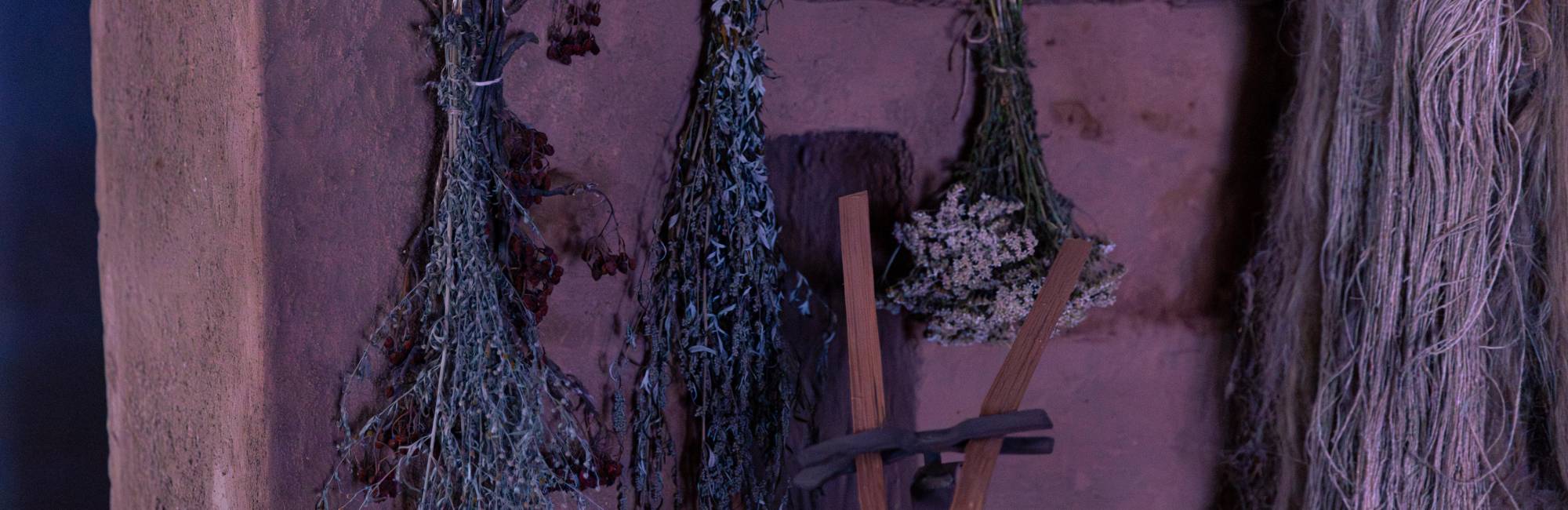
An interdisciplinary project comprising two contextually and formally interconnected parts, Sabbat examines the history of the oppression of women’s communities – primarily through the lens of witch trials – and explores the possibilities of a different, communal and overlooked history grounded in the bodies and communities of women.
The first part is based on a documentary and analytical investigation of witch trials, focusing on historical cases of women accused of witchcraft who underwent judicial proceedings. It examines the broader social, political and economic contexts of these persecutions, with particular attention to women’s position in society and the reasons they came to be perceived as a threat. Special emphasis is placed on the female body – how the physical trauma inflicted upon it was translated into forced confessions and, ultimately, into testimony.
The project also examines the relationship between women and the “devils” with whom they were said to have made pacts. These figures frequently mirror the characteristics of the women’s real abusers: judges, landlords, priests and rapists.
The research further expands to consider the economic dimensions of the persecutions, tracing experiences across social classes – from peasant women and enslaved women to burghers, noblewomen and princesses – and analysing how social status, financial dependence, or economic autonomy influenced the outcomes of the trials. In doing so, the project reveals the marginalised groups of the period, the systems of protection and oppression that shaped their lives and the specific positions occupied by women across diverse geographical and historical contexts.
Rather than approaching witchcraft as a folkloric or supernatural phenomenon, the first part understands it as a mechanism of surveillance, punishment and the elimination of undesirable bodies. It strips away the partial mythologisation that has accumulated around witchcraft and calls it by its proper name: femicide.
The second part departs from the mythological image of the sabbat – the nocturnal gathering of witches – but dismantles and reimagines it as a symbol of a lost women’s community in which knowledge of the body, health, sexuality and care circulated collectively. The sabbat, demonised within the patriarchal imagination as a site of excess and disorder, is transformed into a space of empowerment, intimacy and the transmission of knowledge. This part investigates the forms of knowledge and ritual erased by the logic of femicide: contraception, the refusal or acceptance of motherhood, sexual pleasure, bodily autonomy, communal spaces and women’s solidarity. It asks how these forms of knowledge became criminalised and condemned as sinful, how women’s collective spaces were displaced into the privacy of the home, and how shared practices of care were fragmented and rendered taboo.
The work proposes a community that could exist beyond repressive structures – and perhaps, in some places, once did. Through an act of historical restoration, the stigmatised and violated body of the first part becomes a site of empowerment. The second part thus gestures toward the possibility of another history: one in which the female body is not confined to reproduction, nor transformed into one of the silent engines of industrial production.
Ultimately, Sabbat draws attention to the enduring consequences of femicide: the production of a binary understanding of history, the erasure of alternative social orders, and the disappearance of spaces of resistance and collective emancipation. At the same time, it looks toward possible new models of social organisation in relation to gender, understood as an open and mutable category.
15,00 EUR
12,00 EUR * * EUR for younger than 25 and older than 65, as well as pensioners.
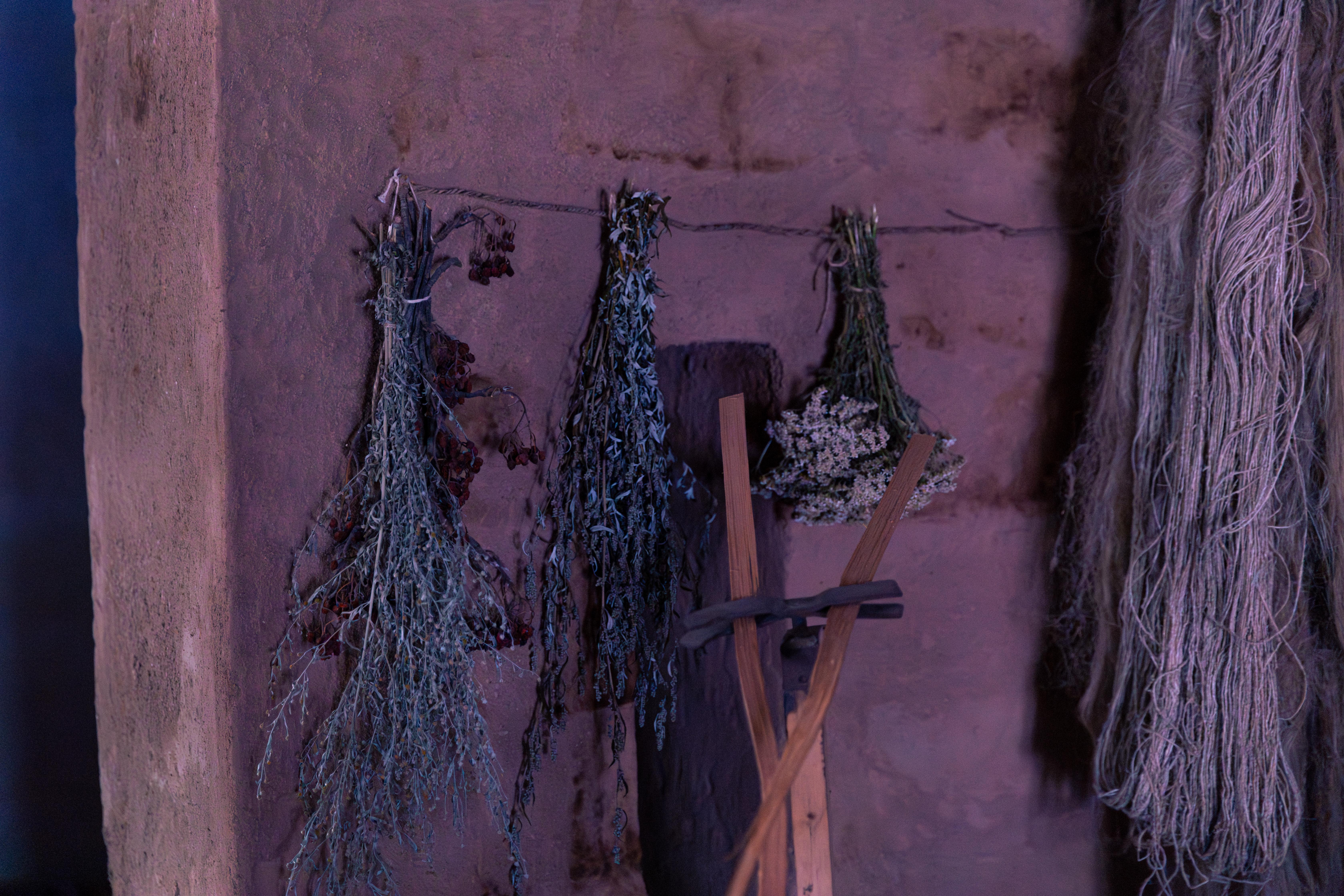
Foto: Dorian Šilec Petek
Project author: Živa Bizovičar
Dramaturg: Nik Žnidaršič
Set design: Nika Erjavec
Costume design: Nina Čehovin
Cast: Mojka Končar, Tamara Avguštin, Ivana Percan Kodarin
Choreography: Ana Javoran
Sound design: Ana Jerina
Production: Maska Ljubljana
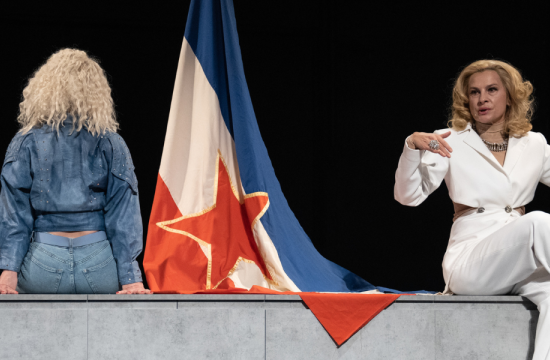
Organised by Kulturishka d.o.o.

Choreography: Moritz Ostruschnjak

Founder and main co-funder of Cankarjev dom’s Arts and Culture programme

