
Running time: 60 minutes
Just before the end of the Yugoslav wars, two strangers meet in a deserted street. Moments before the city is shelled, they find themselves drawn into an encounter marked by passion, fear and longing. Twenty years later, their paths cross again in a Berlin nightclub, far from the battlefield, where techno music thunders instead of shells, in a world still shaped by the repercussions of the past.
“And yet the shell says: There is a tomorrow.”
Dino Pešut
Granatiranje (Air Raid) is a harrowing yet tender story of love, memory and survival. Employing a poetic, intimate and meta-theatrical form, the author weaves personal experience with reflections on war, identity and a generation that came of age in its shadow. At the heart of the play is not the explosion of a shell, but the question of how to maintain hope and closeness in the face of disintegration.
The story is like a ‘small-scale Balkan version of Call Me by Your Name.
Dino Pešut (born 1990 in Sisak) is a Croatian playwright, dramaturg and novelist. He earned a degree in dramaturgy from the Academy of Dramatic Art in Zagreb. A six-time recipient of Croatia’s prestigious Marin Držić Award, he has written numerous acclaimed works, including the play Granatiranje (Air Raid), which won first prize in 2019. Pešut’s plays have been staged at numerous theatres in Croatia and internationally. He has participated in the Emerging Playwrights residency programme at London’s Royal Court Theatre. In addition to playwriting, his novels Poderana koljena and Tatin sin have established him as an important voice in contemporary Croatian literature.
Luka Grbić (born 2000 in Belgrade) is one of the most prominent theatre and film actors of his generation, as well as a director and poet. He began his acting career as a teenager, playing Nenad Maraš in the film Južni vetar (South Wind, 2018), for which he received the Best Acting Debut Award at the Niš Film Festival that same year. He graduated in acting from the Faculty of Dramatic Arts in Belgrade. On stage, he has taken on a wide range of highly diverse and demanding roles, including Andrej in the acclaimed play Divlje meso (Wild Flesh, 2021, Belgrade Drama Theatre), the title role in Zeller’s The Son (2021, Atelje 212), Prince Myshkin in The Idiot (2022, Belgrade Drama Theatre) and Hamon in Antigone (2022, Belgrade Drama Theatre). He is distinguished by his remarkable ability to bring a wide variety of complex characters to life in both theatre and film. He has received several major acting awards, including the Sterija Award for Best Young Actor, bestowed by the “Dara Darinka Čalenić” Fund (2023). From 2023 to 2025, he was a permanent member of the ensemble at Atelje 212. He subsequently continued his artistic career in Slovenia, pursuing further studies in theatre directing at the University of Ljubljana’s Academy of Theatre, Radio, Film and Television (AGRFT). Grbić’s original project, Ide gas (2025, AGRFT), was created as part of his master’s programme.
Luka Bokšan (born 1991 in Celje) is a theatre and film actor. He graduated from the Academy of Theatre, Radio, Film and Television (AGRFT) and is a recipient of the Prešeren Student Award (2019). While still a student, he joined the acting ensemble of the Slovenian People’s Theatre Celje (SLG Celje) and has worked as a freelance cultural professional since 2023. As a guest artist, he collaborates with various institutional theatres, and the productions in which he often takes leading roles regularly tour and receive awards at national and international festivals. Notable roles include Henry VI in Pet kraljev: K psihopatologiji neke monarhije (Kings, 2024, SLG Celje), Lawrence Durrell in Beograjski trio (The Belgrade Trio, 2024, Anton Podbevšek Theatre, Cankarjev dom) and Jože in In mnogi drugi … (And Many Others…, 2025, Prešeren Theatre Kranj, SLG Celje). On the independent scene, he works in performance, physical theatre and contemporary dance, while also establishing himself in film and television and as a compelling interpreter of the written word in Radio Slovenia literary programmes. His work is characterised by a systematic and in-depth approach, a strong stage presence, a pronounced sense of ensemble and a distinct flair for interaction with fellow performers.
Buy tickets
Dino Pešut: Air Raid
22 Sep
20:00
23 Sep
20:00
24 Sep
18:00
12 Oct
20:00
13 Oct
20:00
Premiere
Show more
14,00 EUR
12,00 EUR * * EUR for younger than 25 and older than 65, as well as pensioners.
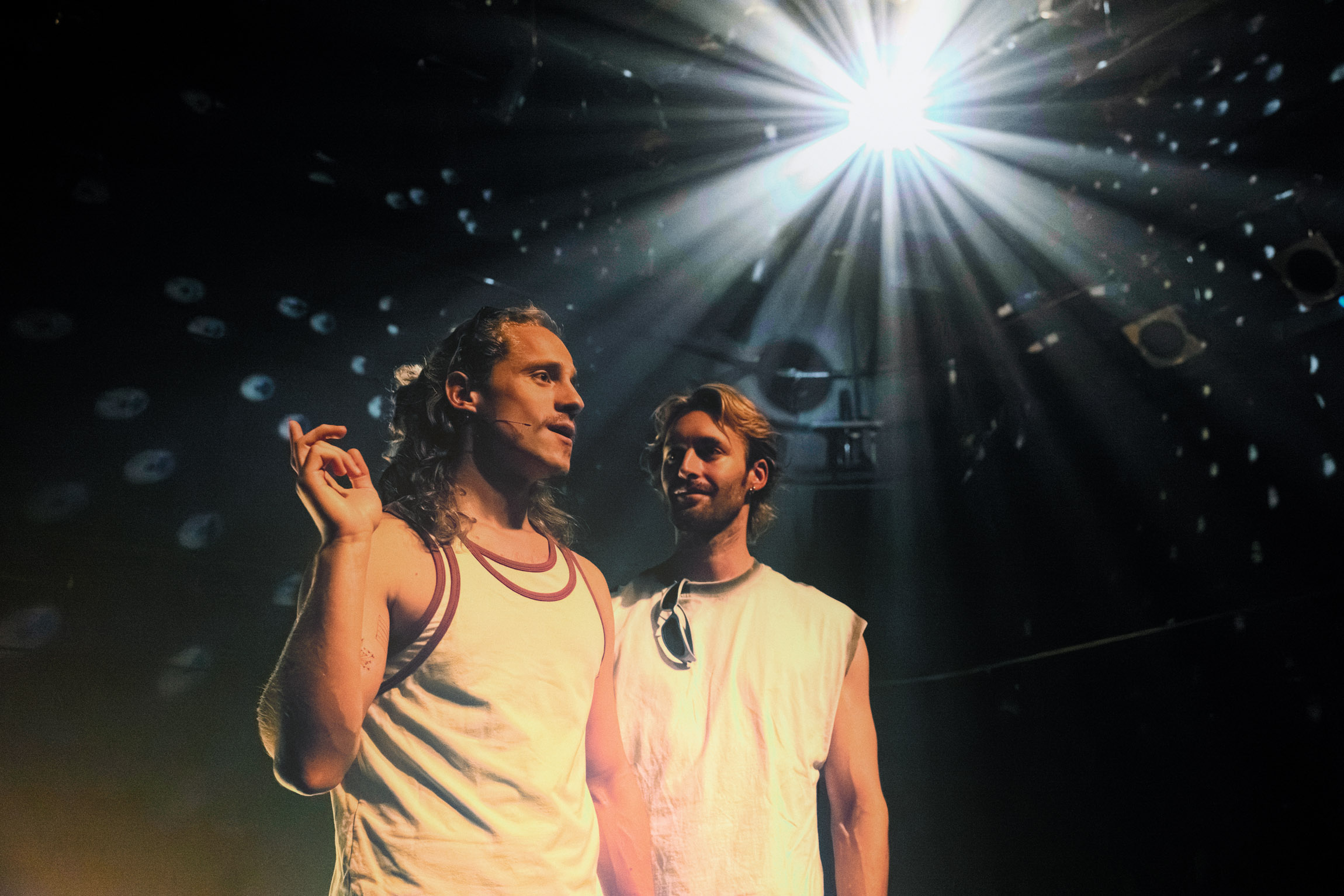
Foto: Nada Žgank
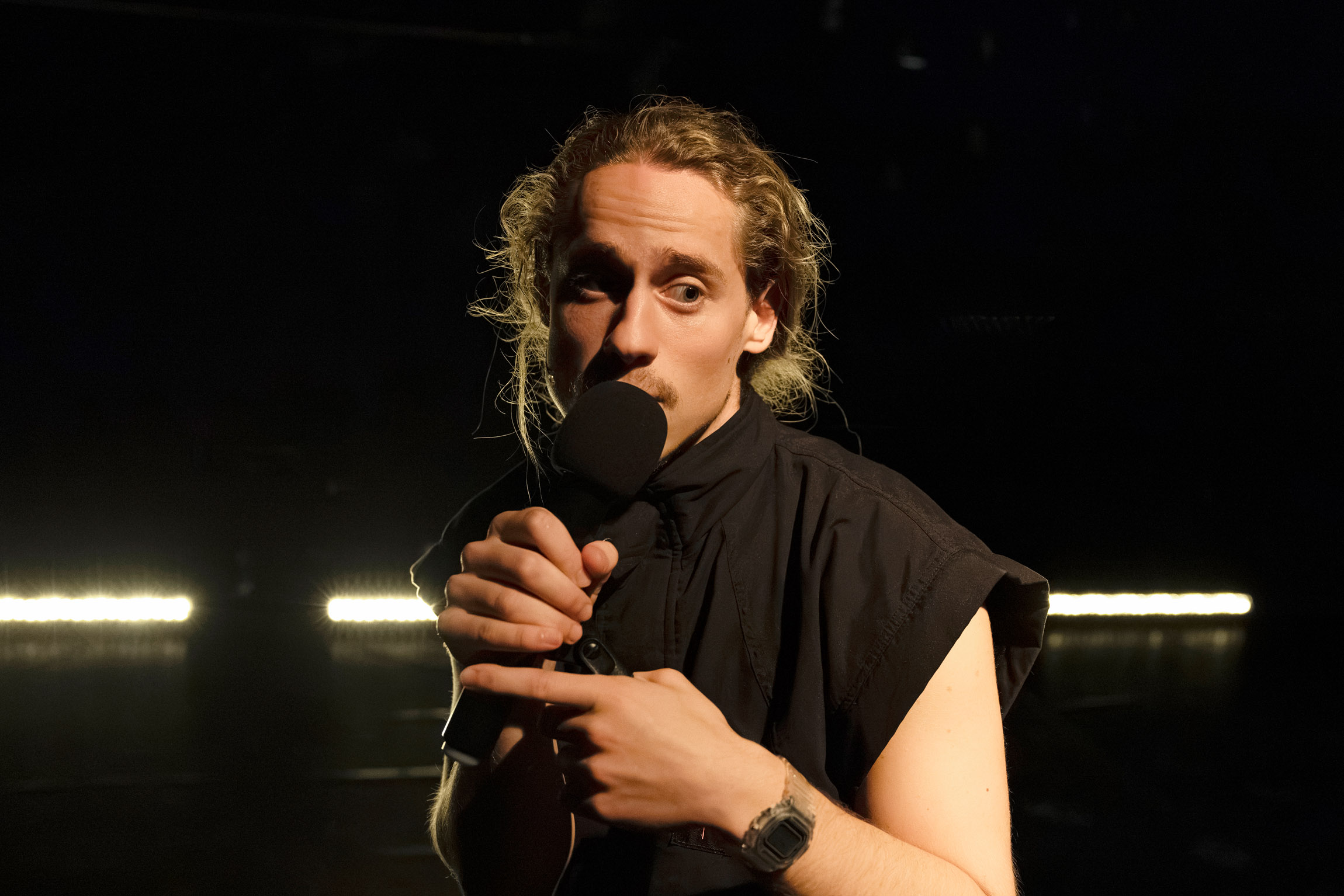
Foto: Nada Žgank
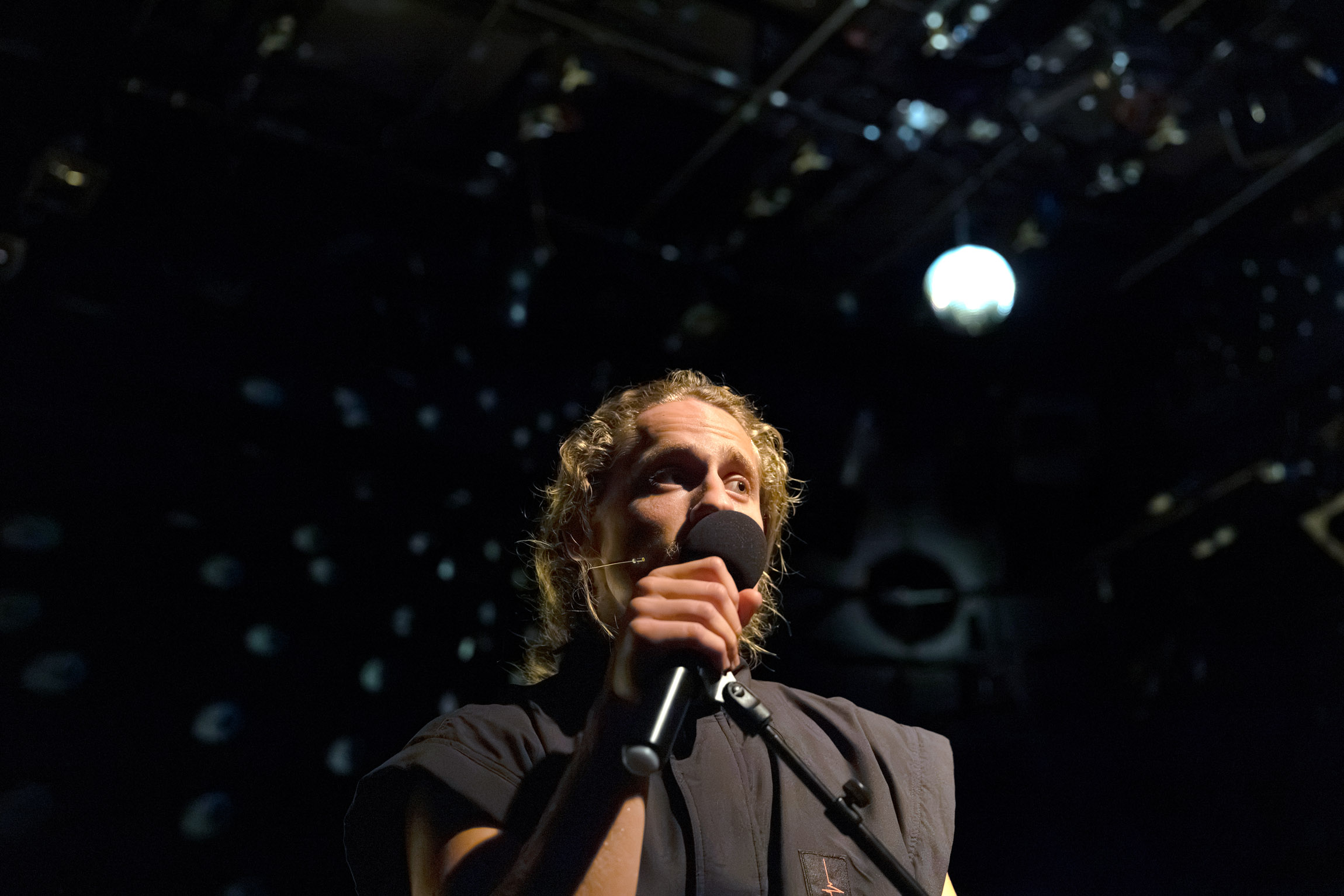
Foto: Nada Žgank
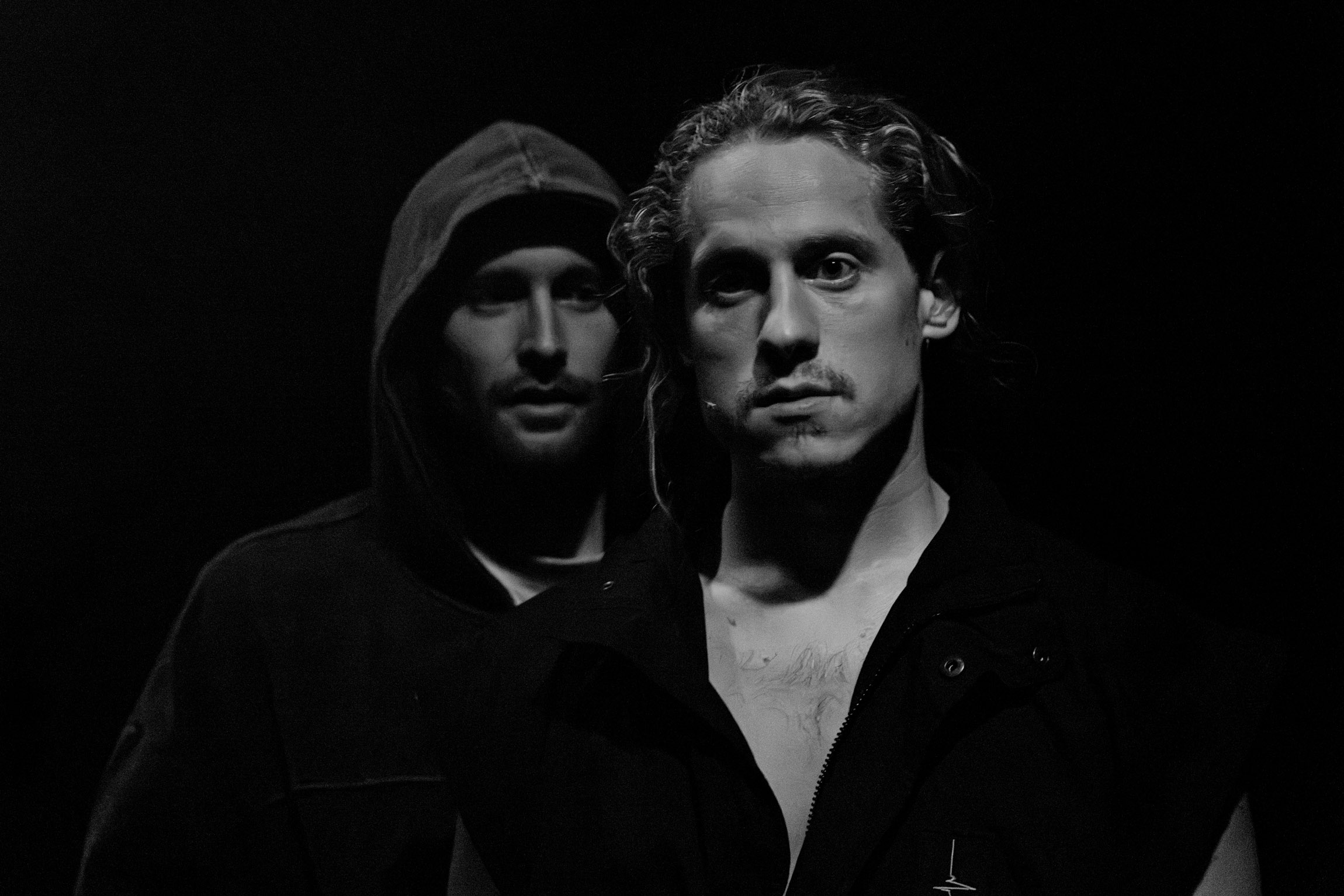
Foto: Nada Žgank

Foto: Nada Žgank
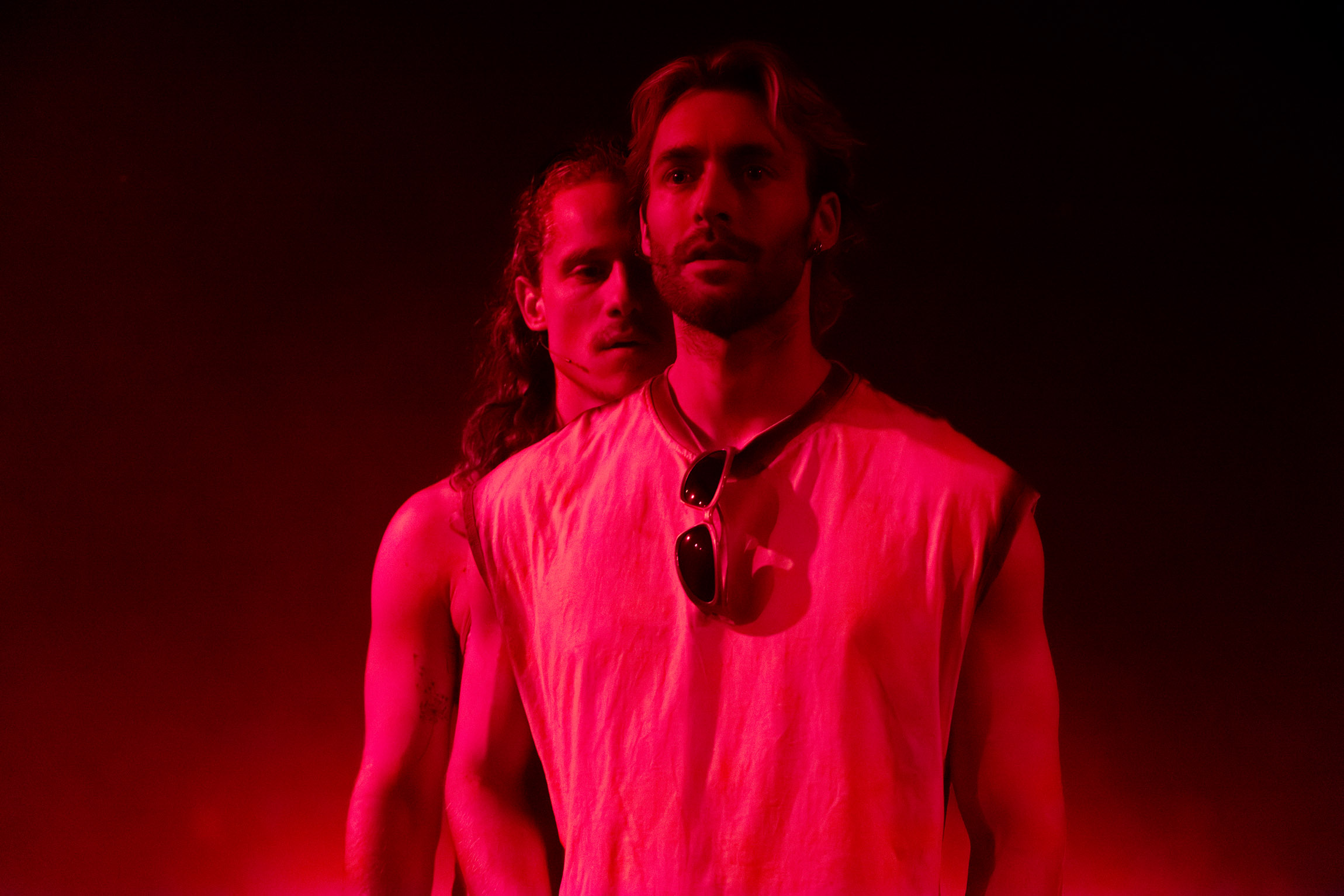
Foto: Nada Žgank
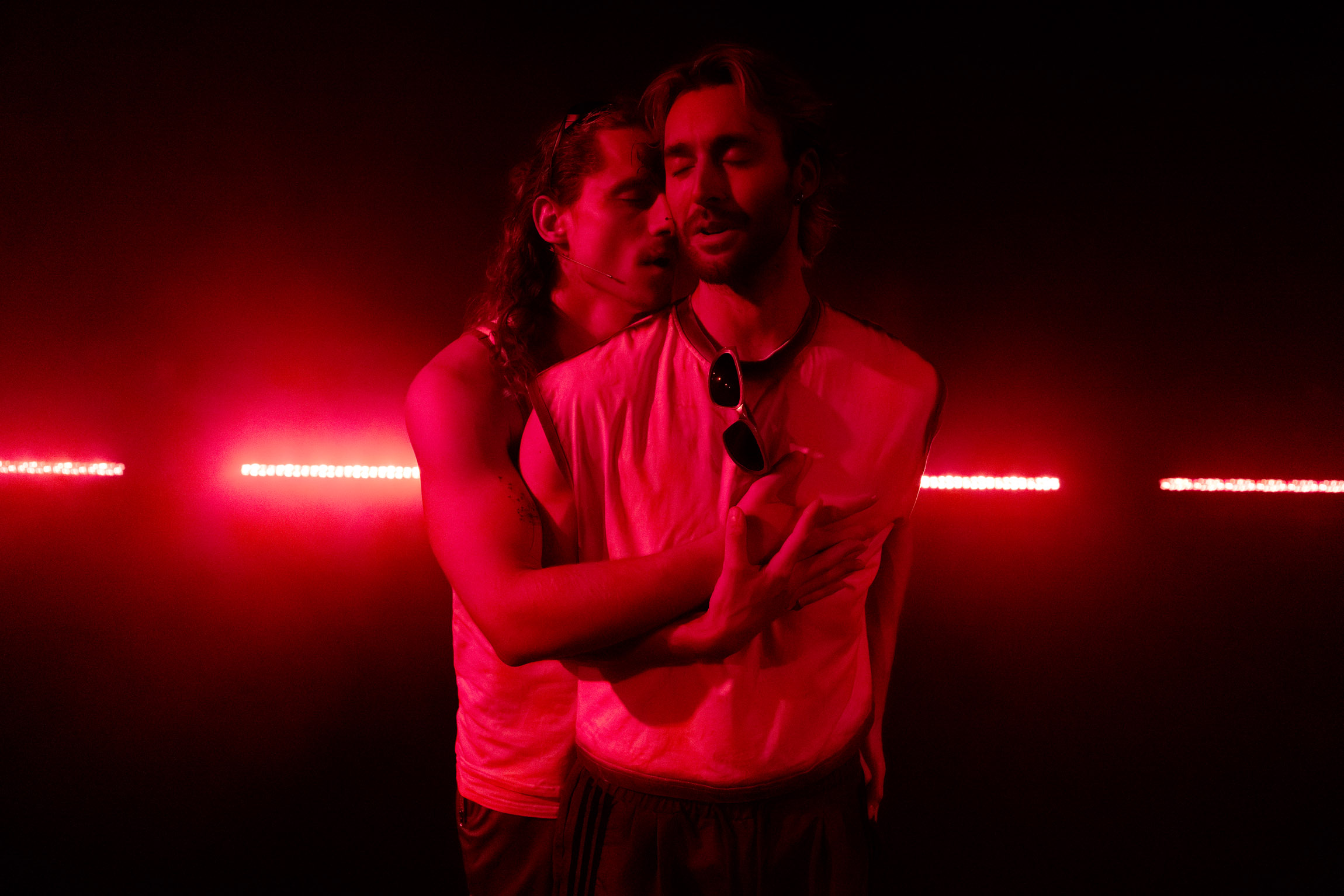
Foto: Nada Žgank
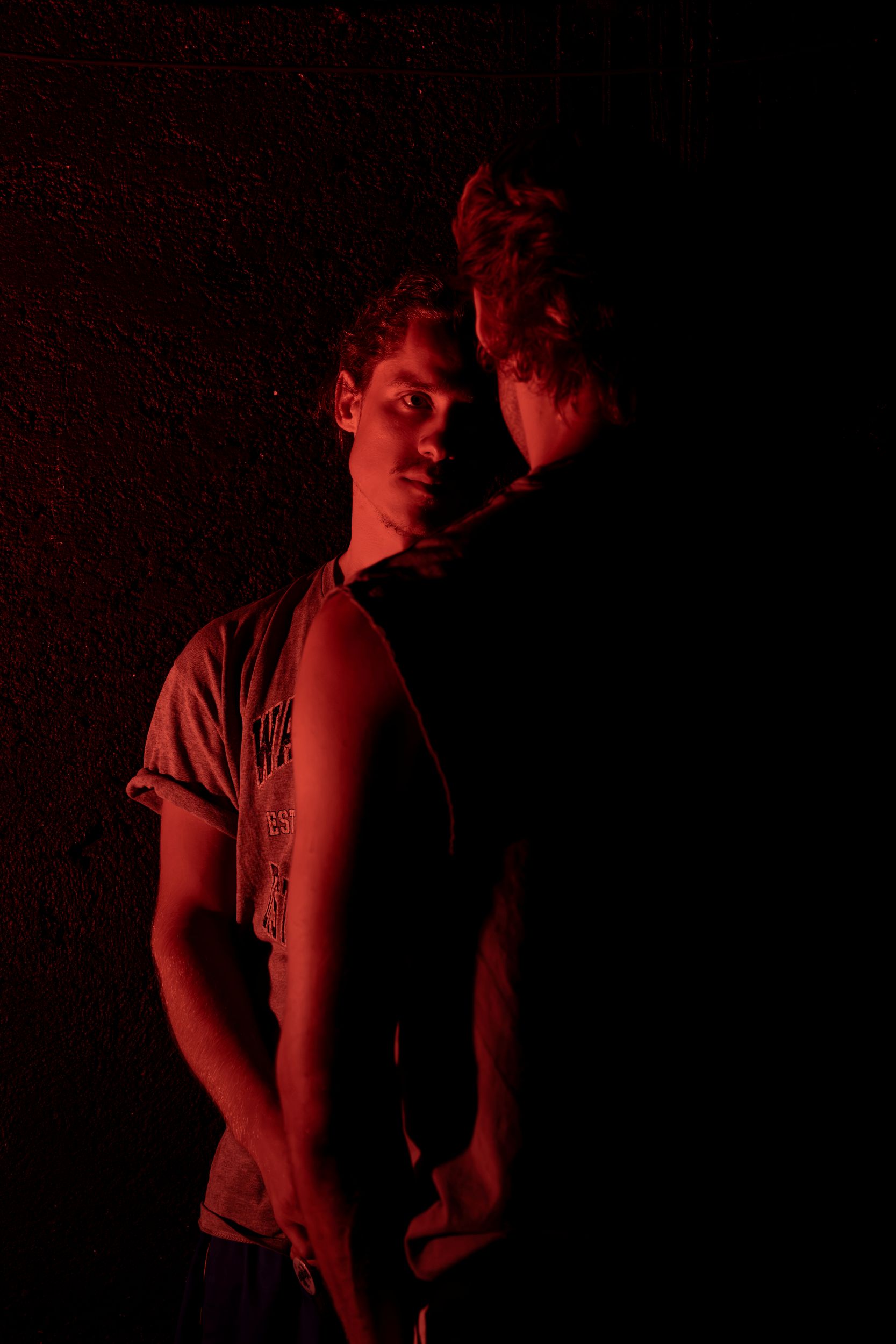
Foto: Marcel Obal
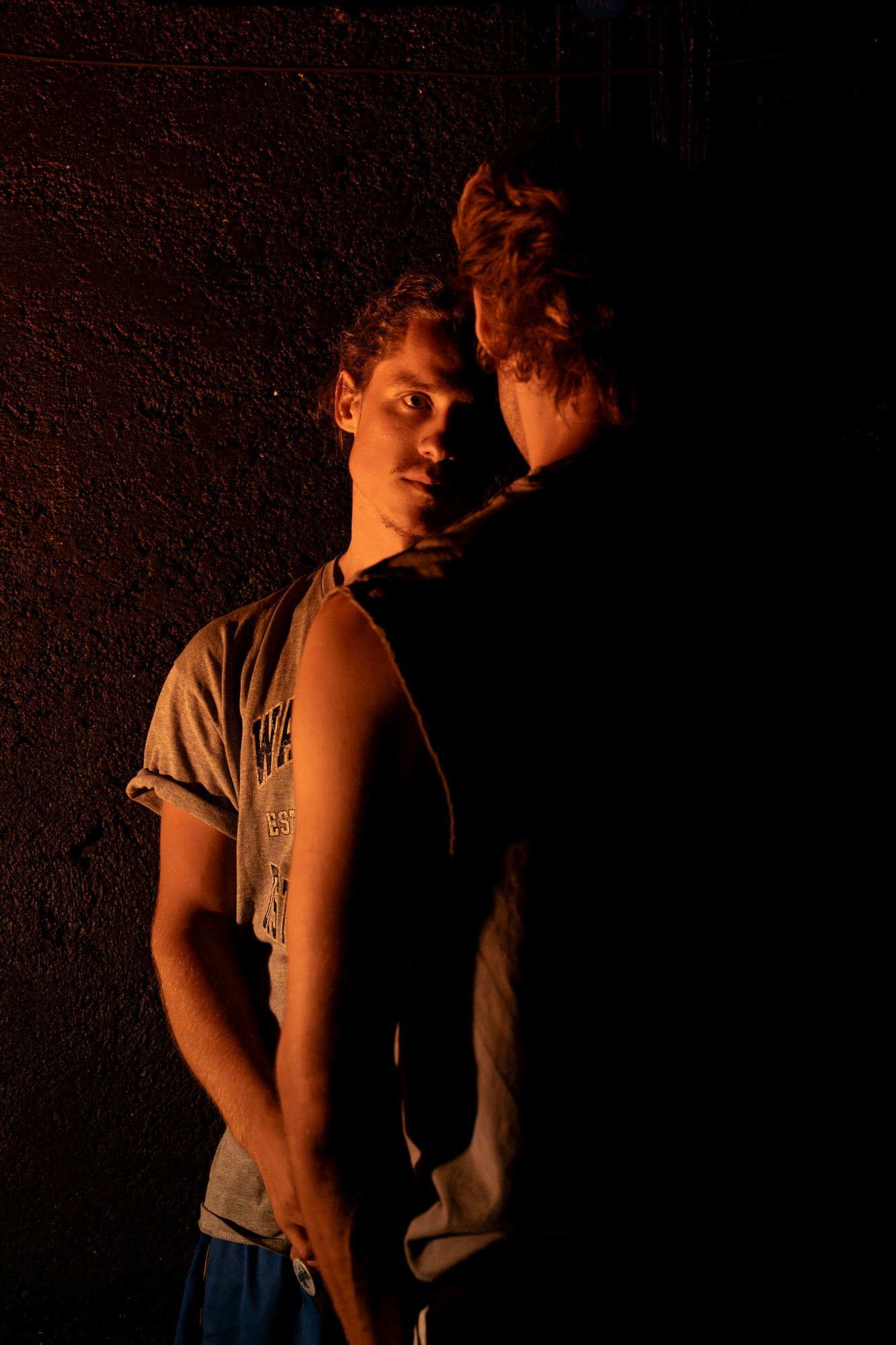
Foto: Marcel Obal
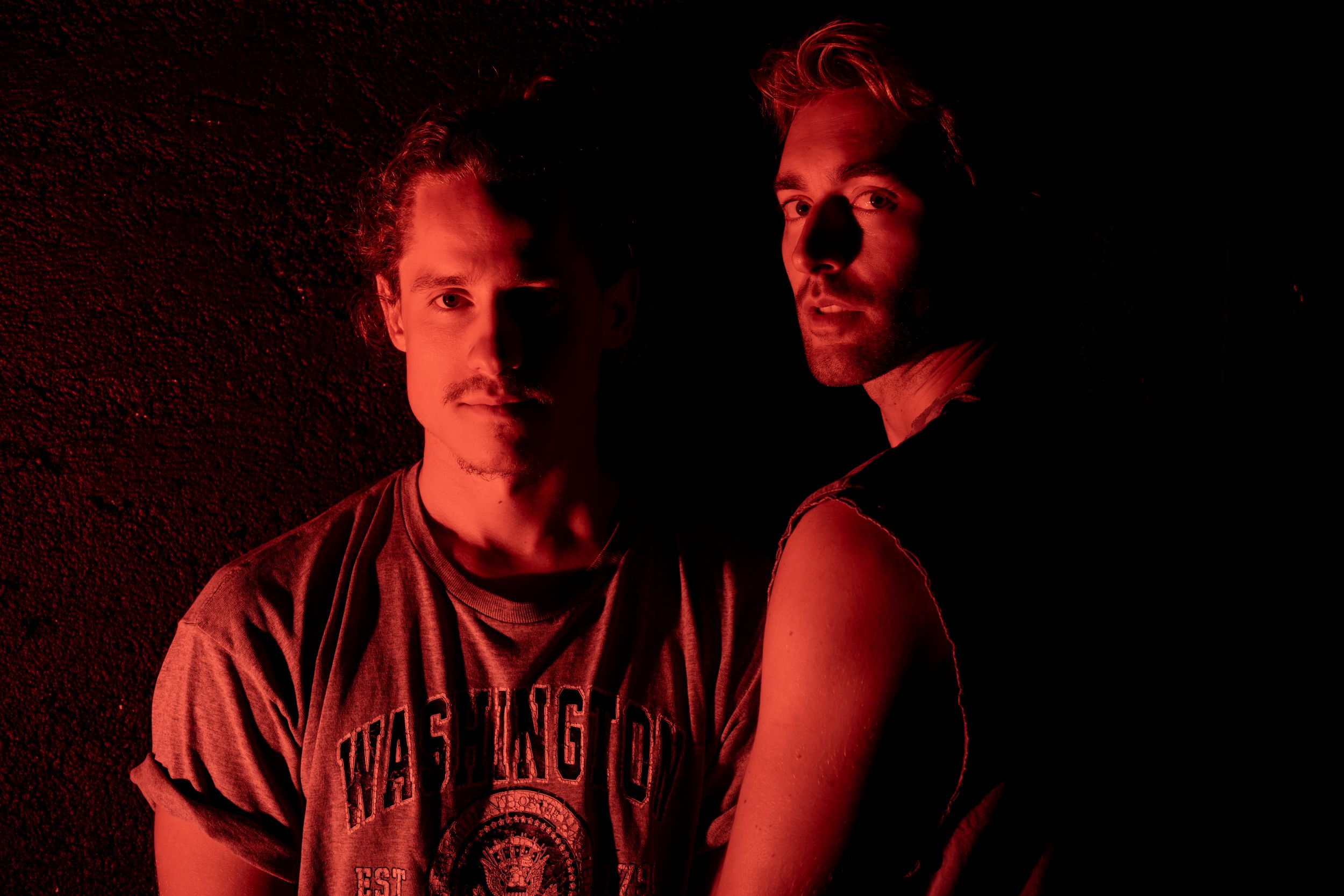
Foto: Marcel Obal
Translated and directed by: Alen Jelen
Performed by: Luka Grbić (Miloš), Luka Bokšan (Rudi)
Dramaturgy: Tilen Oblak
Costume design: Claudi Sovrè
Music design: Nina Kodrič
Sound engineer: Jure Žigon
DJ: Marcel Obal
Lighting design: Janko Oven
Language consultant: Klasja Zala Kovačič
Production: ŠKUC gledališče
Co-production: Cankarjev dom, Zavod Kolaž
Co-financed by: Municipality of Ljubljana, Department of Culture

26 Sep 16:00
Festival Lutke:
M. Solce in A. Jarry: U!-BU?
Lutkovno-igrani dada-kabaret
For audiences aged: 15+
Running time: 50 minutes, without intermission
In Slovenian, without translation.
Bougre de merdre, merdre de bougre.
Matija Solce’s project, a cabaret based on motifs from Alfred Jarry's famous epic, brings together musicians, puppeteers, and actors at the intersection of political theatre, theatre of objects, grotesque merdre-operetta, and Dadaist concert.
King Ubu needs no contemporizing, its resonance is universal as it grotesquely exposes the ever-present immoral, depraved, hypocritical, cowardly, servile, and greedy self-proclaimed "kings". Unlike the controversial drama that caused an outrage in late-19th century France, Teater Matite’s new production employs words as sound impulses, markers, and at the same time deconstructors of the text, which tends to suddenly transmute into barking, music, a fart symphony or a poetic mass execution.
We are drawn into the world of UBU-ism, pataphysics, and ironic social criticism by a quintet of “Dadaismers”—actors, musicians, animators, and idiosyncratic authors—who, with a few toilet brushes, mime puppets, drums, a keyboard, a bass, three butts, and two bellies, verbalize and perform what we all aspire towards today: to be in the service of an idiot.
However, U!-BU? does not let us enjoy the sight of perfectly animated anus. Its further provocations include interactions with other body parts – not to mention the psychological pressures on our status symbols, ideological views, or religion. Just as Ubu tackles all strata of society head-on in his work, the creators of the performance critically reflect on all issues – but refrain from self-criticism, knowing full well that they are the leading experts in their fields.
Join us for an eccentric and dynamic cabaret that will gently and undemocratically persuade the audience of its solely valid point of view.
Theatre is dead! Long live theatre!
Buy tickets
Festival Lutke: M. Solce in A. Jarry: U!-BU?
26 Sep
16:00
26 Sep
20:00
Show more
Presale (until 1. 9. 2026): 7,50 EUR
Regular sale (from 2. 9. 2026): 10 EUR

Foto: Daniel Kvapil, festival Nekropolis

Foto: Daniel Kvapil, festival Nekropolis

Foto: Daniel Kvapil, festival Nekropolis

Foto: Daniel Kvapil, festival Nekropolis

Foto: Daniel Kvapil, festival Nekropolis
Director, composer, co-author: Matija Solce
Visual design, set and costume design: Larisa Kazić
Author of concluding song Zatrubte prdelí v tubu: Filip Šebšajevič
Lighting design: Matija Solce, Larisa Kazić
Performers: Filip Šebšajevič, Tines Špik, Miha Arh, Miha Razdrih, Matija Solce
Puppet builder: Polona Černe
Set and prop building: Sandra Birjukov, Polona Černe, Larisa Kazić
Production: Teatro Matita
Coproduction Cankarjev dom and Ljubljana Puppet Theatre
Financial support: Ministry of Culture of the Republic of Slovenia and the Municipality of Ljubljana
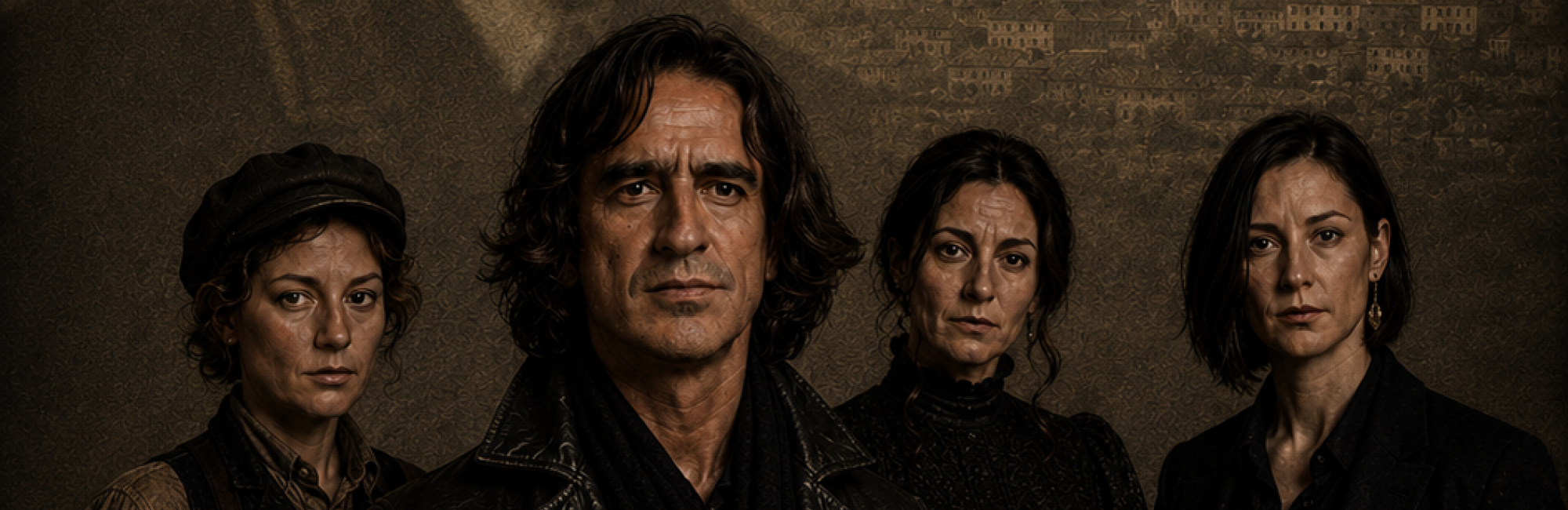
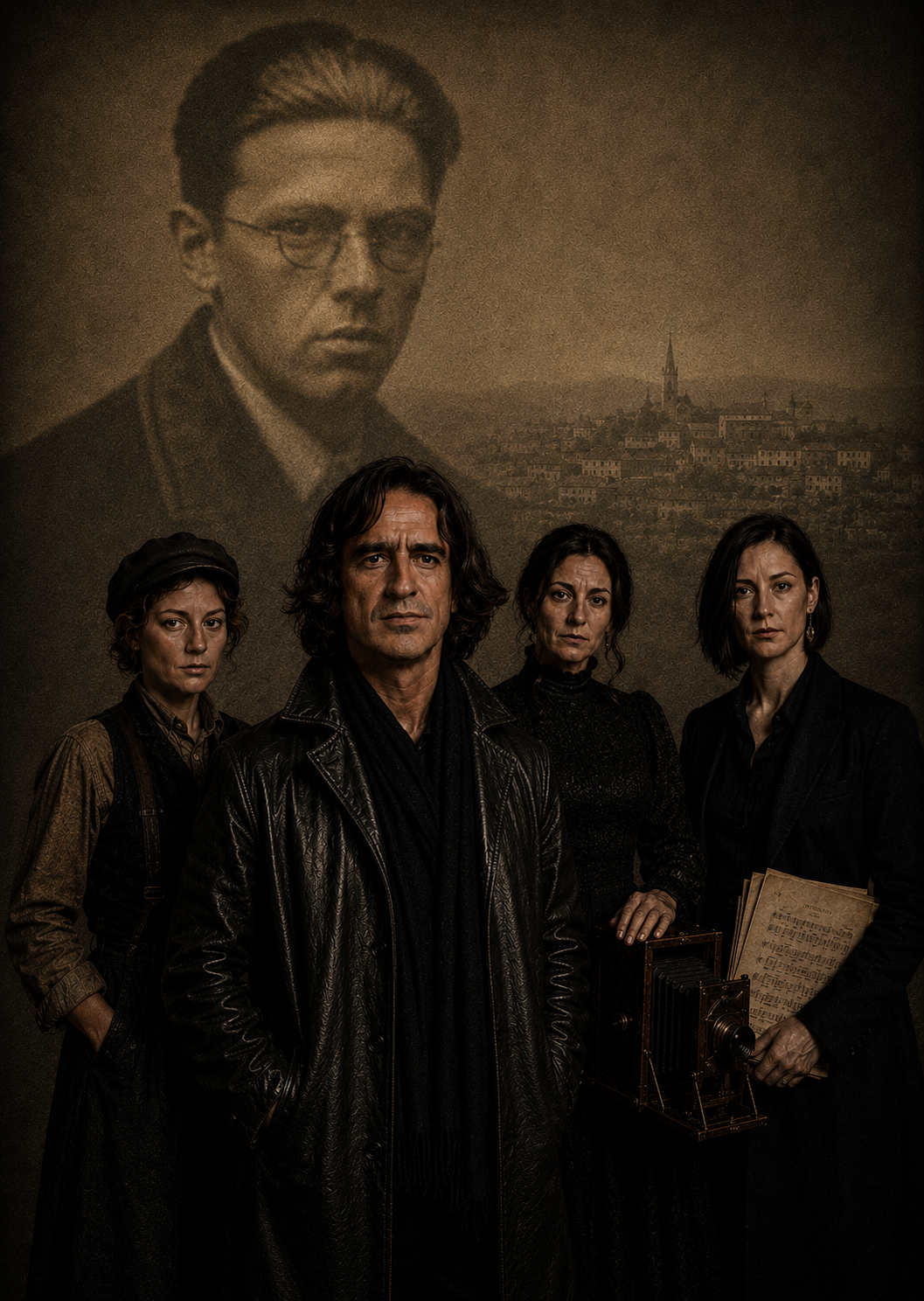
Making a return to the stage, Carlos Pascual has formed an ensemble with which – in the pre-Columbian tradition of conversing with the dead – he will engage in a dialogue with the poet Srečko Kosovel at the Tomaj cemetery. The event will feature Pascual’s Spanish translations of works by the great poet of the Slovenian Karst, offering both casual readers and connoisseurs of Kosovel’s poetry, as well as international audiences, a portrait of this prodigy.
Meta Fajdiga will perform works by Shostakovich, Prokofiev, Scriabin, Mompou and other composers; Neža Bojović, as a telephone operator from the early 20th century, will interweave stories through rap; while Ursula Vratuša will embody the spirit of the Karst landscape and the bora wind through contemporary dance and movement.
Buy tickets
Carlos Pascual: Srečko, My Neighbour
12 Nov
20:00
13 Nov
20:00
14 Nov
20:00
15 Nov
20:00
Premiere
Show more
22,00 EUR
20,00 EUR * * EUR for younger than 25 and older than 65, as well as pensioners.
Project author and director: Carlos Pascual
Poetry: Srečko Kosovel
Music: Prokofiev, Ukmar, Mompou, Scriabin and Shostakovich
Lighting design: Victor Zapatero and Carlos Pascual
Typography and design: Martin Košir
Costume design: Neža Bojović
Performed by: Meta Fajdiga, Ursula Vratuša Globočnik, Neža Bojović, Carlos Pascual
Co-production: Malabar s.p., Black Box Studio, Cankarjev dom, Ljubljana
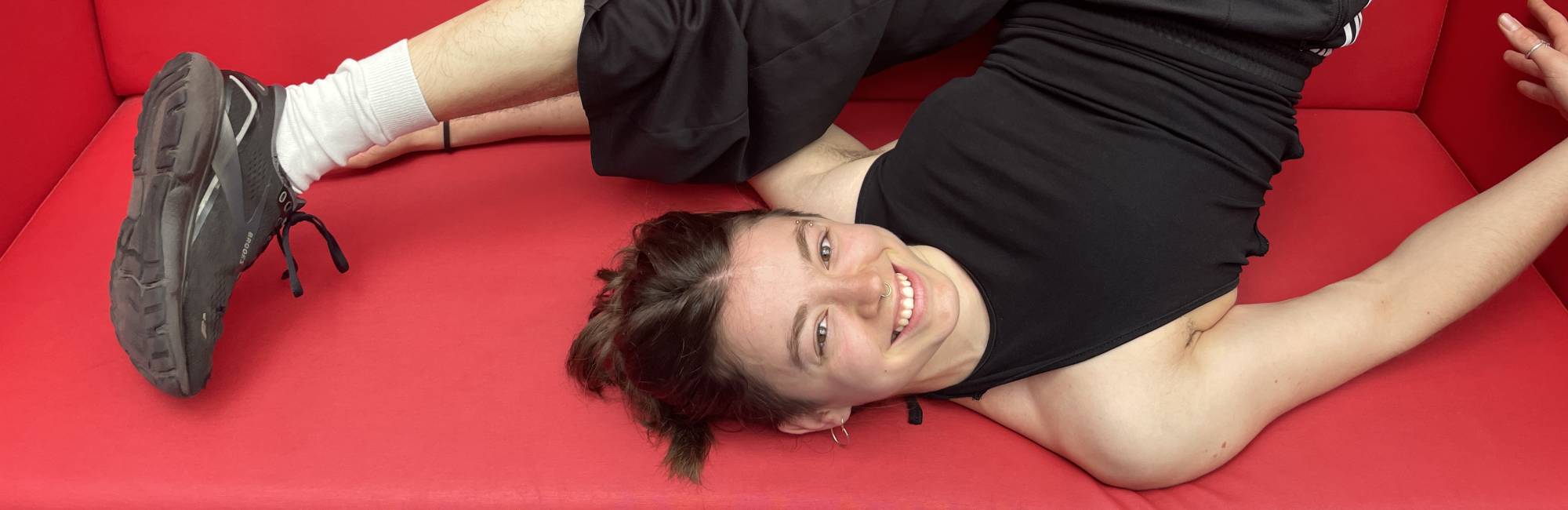
The dance-performative research project Exquisite Corpse is part of a series of projects by young (though not necessarily) authors produced by Emanat that explore stage language. The aim of these explorations is to break the concentration of creative processes that focus exclusively on the product and redirect them towards the development of performing language and a reflection on the issues of WHAT and HOW in relation to artistic creation.
In collaboration with Cankarjev dom, a public presentation will be performed using freely the surrealist play principle of the “cadavre exquis” (the exquisite corpse) to reflect on the structure of the presentation, the development of the performative language or the working methodology developed through the research process. Neža Ana Goričar and Maja Vidic will present their movement research. The presentations will be followed by a conversation between the authors and Maša Radi Buh.
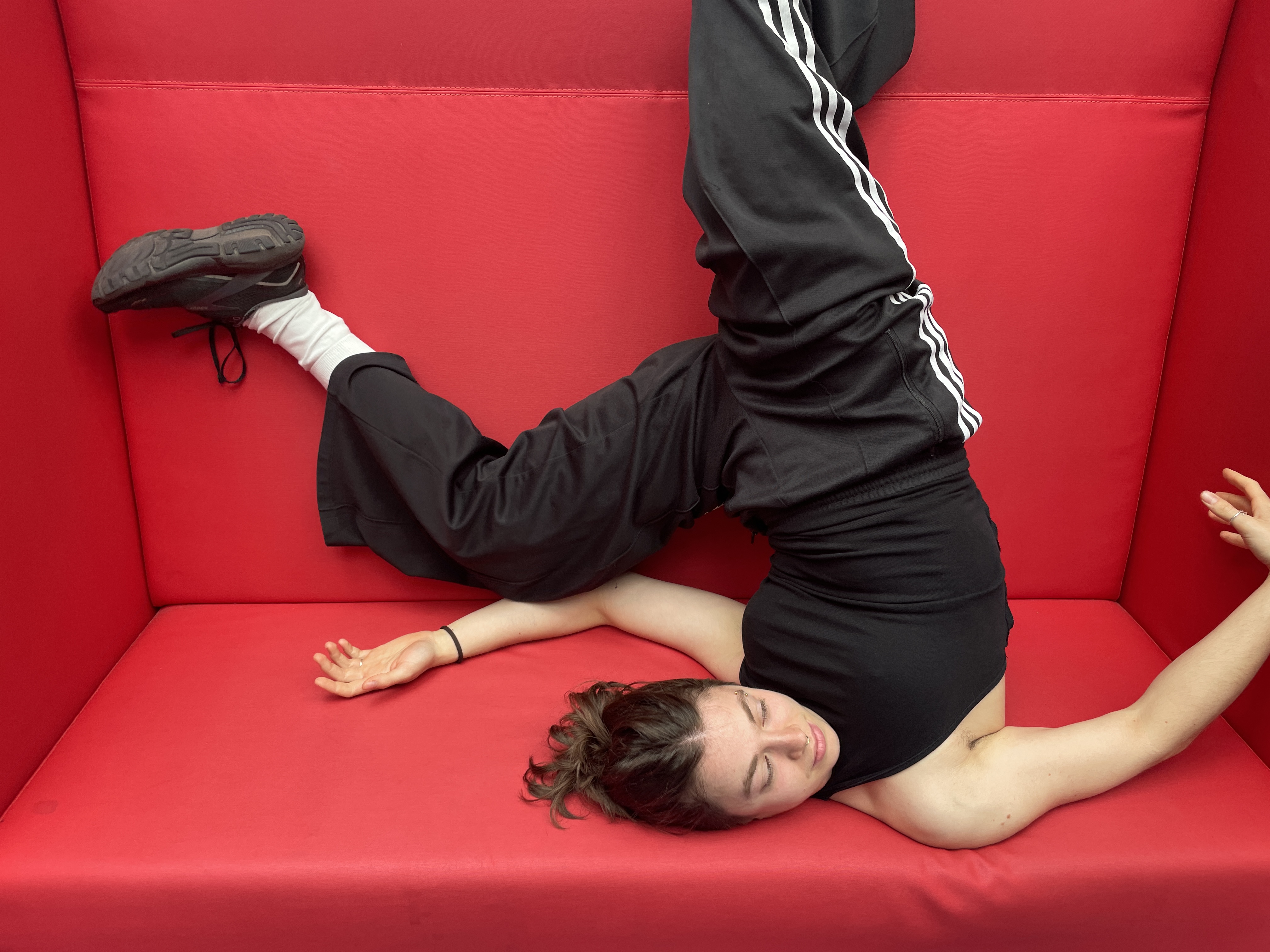
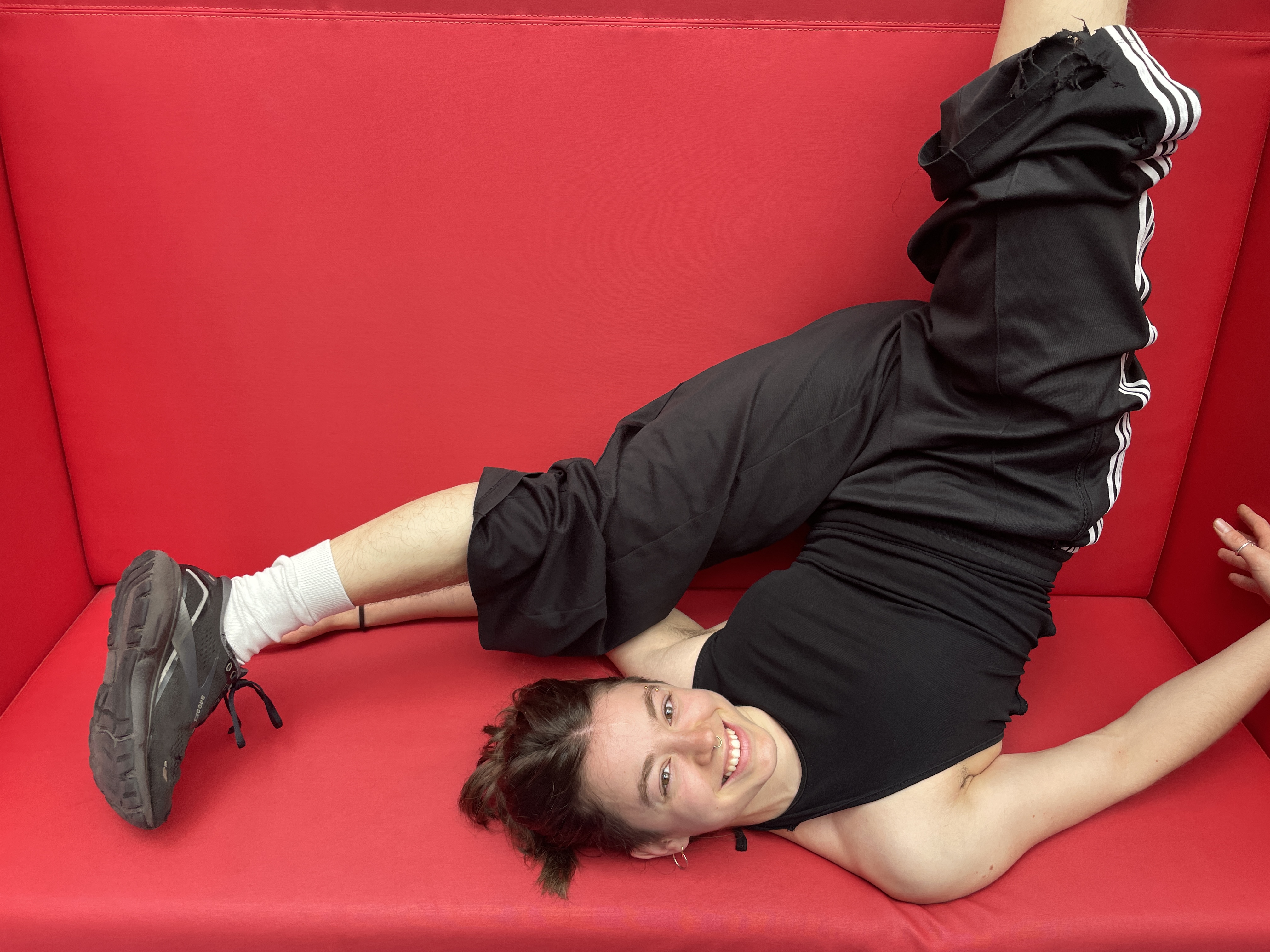
Neža Ana Goričar
The author begins this research out of frustration. Frustration with the endless search for reasons. With the need we have, as viewers, to constantly explain, contextualize, and justify what lies before us; to make sense of it, right there and then, before we’ve even processed it. And this response is most raw when a naked body stands before us. She will explore nudity as a performative tool: how it influences the gaze directed at it, and how it challenges the social norms that condemn it. The main tools of her research will be duration and circularity as instruments of the desexualization of the naked body. Imagine a naked body on a rotating platform: there is no perspective that remains unseen, no angle that can be hidden. It is impossible to frame the body in a specific way, because the rotation reveals absolutely everything. And so the naked body slowly becomes nothing more than a mass of muscle and skin. Through the observer’s perspective, she will explore the tension between intimacy and voyeurism, between vulnerability and power, between curiosity and shame. Above all, it will be about defying justification and rationalization; resisting explanation and logic; a simple WHY NOT?
Neža Ana Goričar (2003) is an artist working in the fields of contemporary dance and performance. After graduating from the Secondary Ballet School in Ljubljana, she decided to study contemporary dance at ArtEZ University of the Arts in Arnhem, the Netherlands, where she will graduate this July. During her studies, she has collaborated with many internationally renowned choreographers, including Anouk van Dijk, Julio Cesar Iglesias Ungo, and Maciej Kuzminski. As a choreographer, she created the solo piece “Lesson no.1” in 2022, which was selected as part of ArtEZ’s annual “Dance Artist Presents” performance and presented alongside works by renowned choreographers such as Ann van den Broek and Mercedes Pedroche. A year later, the site-responsive duet Choo Choo Blue Shoe followed, which she created and performed together with Swedish dancer Olle Arrhenius in the sculpture garden of the Arnhem Museum. Neža was part of the TANZ_KASSEL dance ensemble in Germany last season and is currently collaborating with the interdisciplinary production house KASKO in the Netherlands. As an artist, she is constantly fascinated by the absurdity of everyday life and its parallels with performance. What do we perceive as normal or acceptable—and how do these norms in everyday life differ from those on stage? This is one of the questions currently inspiring her artistic practice.
Movement research, performance: Neža Ana Goričar
Mentoring:
Lighting design: Veronika Hana Grubič
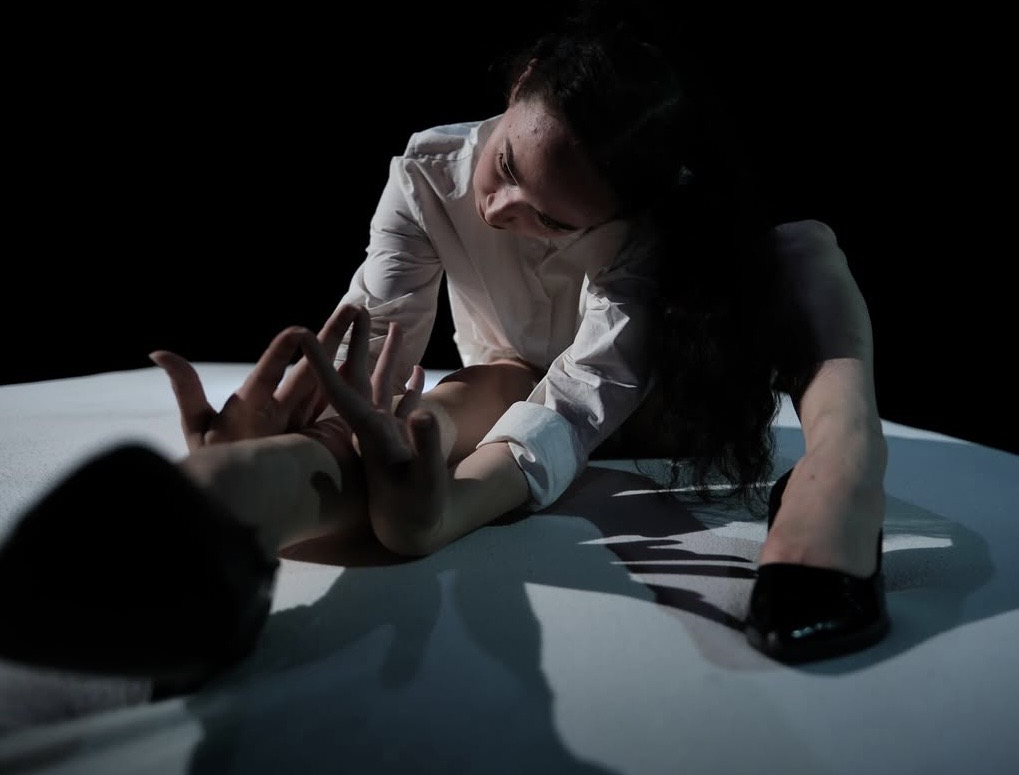
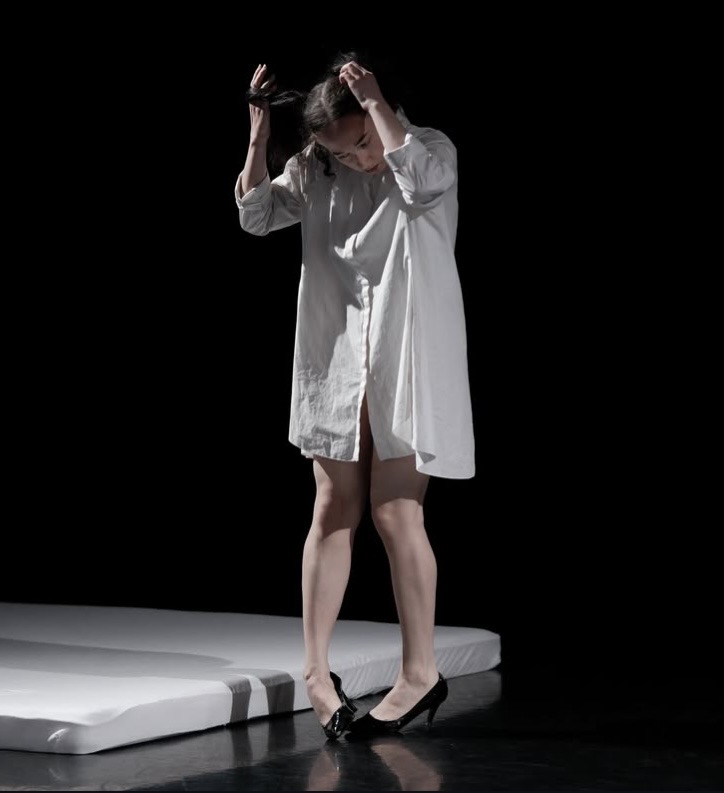
Maja Vidic
This movement-based research is based on an exploration of the character Daisy Hell, whom the author creates and shapes throughout the process. She constructs Daisy’s identity on the basis of defined character traits, inner motivations, psychological factors and impulses, which are reflected in her physical expression. She is interested in the character’s story, which reveals its multi-layered meaning through symbol-laden gestures and the relentless liminal space of her own room. Every internal or external stimulus triggers a physical reaction, a response in the form of a fragmented emphasis on individual parts of the body and limbs. The research focuses on unpredictability and an in-depth analysis of the varying intensities of this emphasis, its resonance or impulse as a concluding action. In this context, the elevation and depression of movement play a significant role, emphasising the contrast between abrupt, constrained movement and the intimacy of the gentle, soft dynamics as the body settles. In her research, the author engages with the concept of society’s devotion to innocence, whereby the obsession with achieving an impossible balance between the body of an ‘innocent young girl’ and that of a ‘fully grown woman’ distorts, distorts and exposes Daisy’s female body, whilst she uncertainly strives to claim autonomy over her own body.
Maja Vidic (2001) is a dancer, choreographer, performer and musician. After studying contemporary dance at the Secondary School of Education, the Grammar School and the Art Grammar School in Ljubljana, she continued her studies at the Fontys Dance Academy (NL) and at the Institute for Dance Art (IDA) at Anton Bruckner University in Austria. Her original solo piece Three Daughters, Two Mothers and One Grandmother (2024) won the award for best choreography and the production award at the OPUS 1 international festival for young dance creators. The work was performed in Prague, Linz and Eisenstadt, where, as part of an artist-in-residence programme, she was a guest at the Burgenland Choreography Centre and took part in the Dance Identity festival. In 2025, as part of the production award from JSKD and the Intakt Dance Studio, she created the vocal-dance performance Psiček nima repa več (a duet in collaboration with Neža Kokalj). In Linz, she also presented the group choreography 3H2M1B and began her research project Daisy Hell.
Movement research, performance: Maja Vidic
Lighting design: Veronika Hana Grubič
Buy tickets
Exquisite Corpse – Presentation of Performative Language Research
18 Dec
19:00
Show more
12,00 EUR
10,00 EUR * * EUR for younger than 25 and older than 65, as well as pensioners.
Neža Ana Goričar - foto: Gaja Slabe
Neža Ana Goričar - foto: Gaja Slabe
Maja Vidic, foto: Elias Choi-Buttinger
Maja Vidic, foto: Elias Choi-Buttinger
Production: Emanat Institute
Co-organisation: Cankarjev dom
Financial support: Ministry of Culture RS

Through a personal interpretation of essays from Susan Sontag’s collection On Women, the dance essay id:ENTITETA (id:ENTITY) explores how everyday experience constantly shapes and disciplines our bodies and identities. The flamenco body functions as a medium and amplifier, channelling the flow of voice and sound and thus granting the dancing body the status of the audible – a body with its own voice that resists silence, existing with the express purpose of making itself heard. By interweaving personal experience with the testimonies of (women’s) disembodied voices – which, through their sonic presence, further open up a space for reflection on the search for autonomy within contemporary social frameworks – the essay seeks points of intersection between the vertical layering of social roles and the horizontal passage of time, ultimately fusing them in a cross that each of us bears alone
Buy tickets
Ana Pandur: id:ENTITETA
26 Nov
20:00
27 Nov
20:00
28 Nov
20:00
Premiere
Show more
16,00 EUR
14,00 EUR * * EUR for younger than 25 and older than 65, as well as pensioners.

Foto: Aleks Zupan Arsov
Artistic Team
Concept and performer: Ana Pandur
Music: Matej Bonin
Dramaturgical advisor: Benjamin Zajc
Space and costume design: Vasilija Fišer
Lighting design: Klemen Kuhar
Visual commentary: Tarja Zupančič Danko
Production: Zavod Koda:Manifest
Co-production: Cankarjev dom, PKD Flamenko
The project is financially supported by the Municipality of Ljubljana.


Peekaboo, an original work exploring the body, the gaze and memory, is the second part of choreographer Bojana Robinson’s imaginary trilogy. Following the contemporary dance performance Mašina (Machine), dedicated to motherhood and caregiving, the artist further explores her role as a woman in society and at home, as well as women’s presence and absence in family and collective memories.
Peekaboo invites us to observe what remains on the verge of the visible – the ways in which bodies and their stories are inscribed in memory. To paraphrase Rebecca Solnit, the utterable can silently both reveal and conceal, prompting the creation of meanings without committing to any specific one. In this elusive field of the gaze, a woman both exists and disappears.
She is in the garden. She stands in the wind.
Her hands bear the traces of former presences.
She erases the evidence of encounters, restless dreams, bitten tongues,
unspoken words, tenderness and reproaches.
She appears in the self-evident whiteness of purity.
She embodies a physicality that is slowly depleted.
She is the subject of every canvas she has prepared for a new life.
She is a projection of fear and salvation.
She is here.
Dimitrije Kokanov
Buy tickets
Bojana Robinson: Peekaboo
9 Oct
20:00
11 Oct
20:00
Premiere
Show more
14,00 EUR
12,00 EUR * * EUR for younger than 25 and older than 65, as well as pensioners.

Foto: Matt Robinson
Artistic director, choreographer and performer: Bojana Robinson
Dramaturgy: Dimitrije Kokanov
Music: Manja Ristić
Set design: Bojana Robinson and Dimitrije Kokanov
Lighting design: Špela Škulj
Photography: Matt Robinson
Video documentation: Hana Vodeb
Producer: Jernej Bizjak
Production: Zavod za sodobno umetniško prakso in teorijo 0.1
Co-production: Cankarjev dom
Co-organisers: Društvo umetnosti in kulture 47, Vrhnika, DUM društvo umetnikov
Financial support: Municipality of Ljubljana


Past event
15 May 2026 20:00
Dino Pešut:
The End of an Era (Konec epohe)
A drama triptych
Pogovor z avtorjem
Pred predstavo Konec epohe v petek, 15. maja, ob 18.30 bo potekal pogovor z avtorjem besedila Dinom Pešutom, pogovarjal se bo Darko Ilin.
Bar Idealist (Cankarjev dom), vstop prost
A baptismal production
Trilogija po besedilih L.U.Z.E.R.J.I., 2012, H.E.J.T.E.R.J.I., 2018, Dobro življenje, 2025
Korana: Everybody hates young people because they remind them of death.
Dino Pešut
2012, Zagreb. Sanjin, Mak, Roza and Paško are L.O.S.E.R.S. Sanjin, who lost his leg in an accident and Mak, who might or might not be Sanjin’s boyfriend, are preparing dinner for Roza and Paško. The inseparable friends who, ever since they arrived in the city, have been confronting life and its challenges together. Sanjin doesn’t yet know that Roza is planning to leave for London, Paško for Berlin and Mak for America.
2018, Zagreb. After her lover’s death, Roza says goodbye to Berlin. She returns to Paško and Sanjin, who, with Mak, is enjoying the inferno of a listless relationship. They’re together again, and everything is like it used to be. An island of freedom and happiness at the edge of history – all around them, there are “fascists” on the rise, and the first “victim” of their march is Korana, an art gallery director. Roza, Paško, Sanjin, Mark and Korana are H.A.T.E.R.S.
2025, Zagreb? Five years after the COVID-19 pandemic and seven years after the playwright ended the play with the promise to the director: I’ll write to you again in five years. It will once again be about friendship. In the time when every last human being has grasped that the future isn’t bright, that the world is not turning towards the better and that nothing is clear anymore … Paško, Roza, Mak and Sanjin are here again. Four friends and the playwright who responded to the director’s invitation to write a new text. A round-up of the decade, a signature beneath the end of an era.
Dino Pešut
One of the most prominent and awarded Croatian playwrights. Despite the international success and the reception of the Slovenian translation of his novel Daddy Issues (2022) his only staged work was a student production Stadion Olympia trilogy (2019) directed by Maša Pelko (UL AGRFT and Glej). Jaka Smerkolj Simoneti, himself an author of several plays (e.g. Little Stars, SNT Nova Gorica, 2024), was the dramaturg and translator of the production. At his initiative, Pešut’s two older adapted plays and a new one will come to life as a drama triptych about leaving, returning and coming of age.
Premieres:
22. in 23. aprila 2026 na malem odru SNG Nova Gorica
13. maja 2026 v Dvorani Duše Počkaj Cankarjevega doma Ljubljana
Buy tickets
Dino Pešut: The End of an Era (Konec epohe)
13 May 2026
20:00
14 May 2026
20:00
15 May 2026
20:00
13 May 2026
20:00
14 May 2026
20:00
15 May 2026
20:00
LJubljana premiere
Show more
14,00 EUR
12,00 EUR * * EUR for younger than 25 and older than 65, as well as pensioners.

Foto: Borut Bučinel / SNG Nova Gorica

Foto: Borut Bučinel / SNG Nova Gorica

Foto: Borut Bučinel / SNG Nova Gorica

Foto: Borut Bučinel / SNG Nova Gorica

Foto: Borut Bučinel / SNG Nova Gorica

Foto: Borut Bučinel / SNG Nova Gorica

Foto: Borut Bučinel / SNG Nova Gorica

Foto: Borut Bučinel / SNG Nova Gorica

Foto: Borut Bučinel / SNG Nova Gorica

Foto: Borut Bučinel / SNG Nova Gorica

Foto: Borut Bučinel / SNG Nova Gorica

Foto: Borut Bučinel / SNG Nova Gorica

Foto: Borut Bučinel / SNG Nova Gorica

Foto: Borut Bučinel / SNG Nova Gorica

Foto: Borut Bučinel / SNG Nova Gorica
Translation and stage adaptation Jaka Smerkolj Simoneti, Iva Štefanija Slosar
Director Jaka Smerkolj Simoneti
Dramaturg Iva Štefanija Slosar
Language Consultant Anja Pišot
Set Designer Urša Vidic
Costume Designer Timotej Rosc
Composer and Sound Designer Gašper Lovrec
Lighting Designer Bor Ravbar
Stage Manager Kaja Trkman
Prompter Brigita Gregorič
Stage Foreman Ambrož Jakopič
Prop Manager Gorazd Prinčič
Cast:
Roza Tamara Avguštin, guest artist
Mak Ivan Čuić, guest artist
Sanjin Mario Dragojević, guest artist
Paško Matija Rupel
D. P., Korana, Vesna Marjuta Slamič
Production: Slovene National Theatre SNG Nova Gorica
Co-production: KUD svobodno neinstitucionalno gledališče (Mija Špiler) and Cankarjev dom

For audiences aged: 15+
Running time: 70 minutes, without intermission
In Slovenian, without translation.
Cankar is a complex and visually rich puppet portrait of one of Slovenia's greatest writers, Ivan Cankar. The show’s director and visual designer Silvan Omerzu delves deep into Cankar's intellectual world. In using puppets from the director’s various creative periods, Cankar also chronicles the development of Omerzu's poetics and aesthetics.
The performance draws on the extraordinarily prolific oeuvre of Ivan Cankar – vignettes, plays, novels, and letters – and focuses on themes running through his writing: longing, guilt, social inequality, eroticism, faith, and death. Cankar is not only a tribute to the writer Ivan Cankar on the 150th anniversary of his birth, but also a witty, moving, and occasionally dark visual study of an artist whose ideas are still alive and inspiringly relevant today. Blending puppetry, stage adaptation, and atmospheric imagery, the show creates its own theatrical language, embodying Cankar's ideas.
The performance combines various puppetry techniques, while drawing on the power of poetic set design, where automatons, masks, light, and shadows incarnate the landscapes of Ivan Cankar's inner worlds and dreams. The central narrative thread is a selection of letters written by Cankar the puppet in different periods of his life: to his mother, Ana Lušin, Etbin Kristan, and Zofka Kveder. The show’s main dramatic block is Cankar's play Pohujšanje v dolini šentflorjanski (Scandal in the Valley of St Florian), the second act of which is performed entirely with Javanese puppets, while the first and third acts employ the formats of shadow and narrative theatre. Silvan Omerzu is one of Slovenia’s most prominent contemporary puppetry artists, working at the intersection of visual and performing arts. Cankar’s director and visual designer, Silvan Omerzu, is Slovenia's leading puppetry artist, known for his unique authorial vision, precise mise-en-scène, and distinctive visual style.
Silvan Omerzu (1955) is a visual and puppetry artist. After graduating from the Faculty of Education in Ljubljana, Omerzu started working at the Ljubljana Puppet Theatre. In 1983, he completed his specialization in puppet theatre scenography and puppet design in Prague. After returning to Ljubljana, he developed a signature artistic style applied most manifestly to the productions of the Konj theatre, co-founded with the director Jan Zakonjšek. As a freelance artist, he collaborated with the Ljubljana Puppet Theatre, the Maribor Puppet Theatre, the Glej Theatre, Cankarjev dom, and the Mladinsko Theatre, as well as with international partners. His shows toured numerous international festivals in Croatia, Italy, the Czech Republic, France, Austria, Belgium, Bosnia, and the United States. Omerzu’s collaborations with the Maribor Puppet Theatre include standout, visually stunning productions: Salto mortale (2012), Zlata ptica (2014), Sanje o zvezdi (2016), Zlatolaska in trije medvedi (2019), Besede iz hiše Karlstein (2017) and Želodkova skrivnost (2022). Omerzu is recipient of various international and Slovenian awards for his achievements in the field of visual arts and theatre, most notably the prestigious Prešeren Fund Award (2006). In 2025, he won the Klemenčič Award for Lifetime Achievement (UNIMA Slovenia).
Buy tickets
Cankar
19 Mar 2026
20:00
20 Mar 2026
20:00
21 Mar 2026
20:00
19 Mar 2026
20:00
20 Mar 2026
20:00
21 Mar 2026
20:00
Premiere
Show more
14,00 EUR
12,00 EUR * * EUR for younger than 25 and older than 65, as well as pensioners.

Foto: Boštjan Lah

Foto: Boštjan Lah

Foto: Boštjan Lah

Foto: Boštjan Lah

Foto: Boštjan Lah

Foto: Boštjan Lah

Foto: Boštjan Lah

Foto: Boštjan Lah

Foto: Boštjan Lah

Foto: Boštjan Lah

Foto: Boštjan Lah
Director and Visual Design Silvan Omerzu
Music Composer Vasko Atanasovski
Puppet Technologists Silvan Omerzu, Žiga Lebar
Language Consultant Metka Damjan
Assistant Language Consultant Tjaša Pirnar
Lighting Designer: Gregor Dvornik
Sound Designers: Aljaž Fredi Novak, Tadej Špindler
Puppet Makers: Silvan Omerzu, Žiga Lebar, Iztok Hrga
Stage Set Builders & Costume Makers: Lucijan Jošt, Mitja Pastirk, Branko Caserman, Mojca Bernjak
Performed by Barbara Jamšek, Miha Bezeljak, Uroš Kaurin, Gregor Prah
Choral performance by: Mixed Choir KUD Mejnik Šentilj Alojzij sveti (Vasko Atanasovski), Oj ta vojaški boben (folk song)
Maribor Puppet Theatre in co-production with Cankarjev dom and the Artistic Association Konj

Duration: 50 min
“Two Men in Underwear” is a gentle wrestling match that explores the tension between our inherent need for vulnerability and the barriers that protect us from it. On the stage transformed into a quiet arena, the performers pass through subtle lifts, falls and deconstructed movement patterns, where flying limbs rearrange their intertwined bodies – like a moving pile of flesh eager for collision. In their desire to taste vulnerability, they seek refuge in a departure from the societal view, where strength is often associated with physical endurance and emotional restraint. Their transformative relationship revolves around the fine line between pain and pleasure, love and hate, where the measure of courage will be the one to draw it.
Presentations of work in progress:
30 January 2026, NEFCD, Härnösand, Sweden
15 February 2026, Zuhause Arnhem, Arnhem, The Netherlands
Burja Podlesnik (2001) is a dancer and choreographer. After graduating from the contemporary dance grammar school SVŠGUGL (Secondary Preschool Education, Grammar School and Performing Arts Grammar School Ljubljana), she continued her studies in Sweden at the NEFCD program (New Education for Contemporary Dance) and in 2025 graduated with a Bachelor of Dance degree from ArtEZ University of the Arts in the Netherlands. Burja was part of IlDance's youth company IlYoung, where she danced the work Self Contained, choreographed by Israel Aloni. She performed the work Addio Unplugged by ICK Amsterdam and worked with choreographers such as Mari Carrasco, Miguel Altunage Verdicie, and Caroline Finn. Burja received the Best Dancer Award at the OPUS 1 International Festival of Young Dance Creators in 2019 for her solo Med borovjem temnim (Among the Dark Pine Trees) and during her bachelor studies delved into choreography with the solo Snippet, group work Leftovers, and the duets In My Room and On the Mat. In critically responding to current reality, Burja seeks to reconfigure the space given to things that have no space and voice things that otherwise remain silent.
Swedish dancer Oscar Magnusson (2001) graduated in dance from ArtEZ University of the Arts with a Bachelor of Dance degree in the Netherlands. Oscar performed the work Addio Unplugged by ICK Amsterdam and worked with the choreographers Mercedes Pedroche, Faizah Grootens, Jelena Kostić, and Anderson Carvalho. With the choreographer Jasper van Luijk, he worked on the solo Pushing Waves and the group piece Krave. He was a choreographic assistant of the work come in but never come back by the choreographer Dalton Jansen.
Dutch-Turkish dancer Koen Kaya Eye (2002) graduated from Codarts University of the Arts with a Bachelor of Dance degree. Shortly after, Koen danced with Introdans and Club Guy & Roni’s Poetic Disasters Club. He has performed works by Martha Graham, Mauro Bigonzetti, Andonis Foniadakis, Ed Wubbe, and Adi Schwarz, among others. Koen was a choreographic assistant for "The Breakable Us" by Olivia Court Mesa, created for Scapino Ballet Rotterdam. From 2025 onward, Koen joined Ultima Vez under the direction of Wim Vandekeybus, reviving "What the Body Does Not Remember" in 2026.
Buy tickets
Burja Podlesnik: Two Men in Underwear
5 Mar
20:00
6 Mar
20:00
8 Apr
20:00
18 Oct
20:00
Premiere
Show more
14,00 EUR
12,00 EUR * * EUR for younger than 25 and older than 65, as well as pensioners.

Foto: Mathieu Hebeisen

Foto: Mathieu Hebeisen

Foto: Mathieu Hebeisen

Foto: Mathieu Hebeisen

Foto: Mathieu Hebeisen

Foto: Mathieu Hebeisen
Concept, choreography: Burja Podlesnik
Co-created: Oscar Magnusson, Koen Kaya Eye
Performed by: Oscar Magnusson, Koen Kaya Eye/Ivan Tocchetti
Dramaturgy: Maša Radi Buh
Mentorship: Danielle Dietz
Light design: Veronika Hana Grubič
Graphic design: Špela Šivic
Executive production: Tamara Pepelnik
Production: Emanat, Institute for Development and Affirmation of Dance and Contemporary Art
Co-production: Cankarjev dom
Co-production residencies: NEFCD New Education for Contemporary Dance, Performing Arts STUDIO, Härnösands folkhögskola, Zuhause Arnhem, Festival Velenje
Financial support: Ministry of Culture RS, City of Ljubljana


Past event
19 Apr 2026 20:00
Vanishing Points (Točke izginjanja)
Plesno-lutkovna predstava za odrasle
Running time: 50 minutes
Dancer and choreographer Kaja Lin and puppeteer Maja Kunšič meet for the first time in a joint exploration of the theme of memory. They use the stage an intimate space where fragments of personal memories emerge from their bodies and objects—fragile, elusive, yet deeply present. What happens when you try to capture a piece of the past? How quickly do points of remembrance transform into vanishing points? In a blend of movement and animation, the body and the object become equivalent narrative mediums.
We are all fragments of what we remember.
Yet, who are we if our memory is blank? What if what we remember is fiction? What if we orchestrate our own memories?
The title, Vanishing Points, is borrowed from a collection of poems by Lucija Stupica, who was the original inspiration for dancer and choreographer Kaja Lin and puppet designer Maja Kunšič. In the performance, the creators explore various relationships linked to different memories of significant events in their lives. They draw on memories of the body as well as various objects, while also probing into relationships: dancer – object, puppeteer – object, dancer – puppeteer, woman – woman, relationship – relationship.
The multidisciplinary approach (stage acting, puppetry, poetry, and dance) builds upon the artistic background of both creators. The stage thus becomes an intimate space for the performers’ reminiscences, which emerge through the body and various objects that evoke memories of childhood and of people who are no longer with us.
The performance seeks to raise profound, existential questions about how memory shapes our identity, our perception of reality, and our self-understanding.
Are we really just a collection of personal memories? If memory is the nucleus of our sense of self, does memory loss mean losing one’s identity?
Who are we without memories? Is there a part of us that transcends memory?
Is our memory reliable? How much of what we remember is true?
Would we be freer without the burden of memory?
Are memories a part of us or something bigger, connected to our collective past?
How strong is the impact of memories that can't be consciously recalled, but in truth markedly influence our lives?
Does our "eternity" depend on someone who remembers us or will remember us?
The show’s concepts are based on various philosophical writings. The most significant is Plato's metaphor of memory as a wax tablet, mentioned in his dialogue Theaetetus. As something is perceived and experienced, it leaves an impression in wax, just as an image is imprinted on a soft wax surface.
Smo res le skupek svojih spominov? Kdaj se spomin prelevi v fikcijo? Kako nas usmerjajo spomini, ki jih ne moremo zavestno priklicati? Ali v nas obstaja nekaj, kar presega spomin? In ali je naša večnost odvisna od tega, ali se nas bo nekdo spominjal?
Predstava nas vodi skozi pokrajino spomina, kjer se osebni drobci prepletajo s poetičnimi podobami, filozofskimi odsevi in neizgovorjenim, ki se osvobaja iz telesa. Točke izginjanja tako postanejo prostor vmesnosti – kraj, kamor se vračamo, čeprav ga ni več na nobenem zemljevidu.
Buy tickets
Vanishing Points (Točke izginjanja)
27 Dec 2025
20:00
28 Dec 2025
20:00
18 Apr 2026
20:00
19 Apr 2026
20:00
27 Dec 2025
20:00
28 Dec 2025
20:00
18 Apr 2026
20:00
19 Apr 2026
20:00
Premiere
Show more
14,00 EUR
12,00 EUR * * EUR for younger than 25 and older than 65, as well as pensioners.

Foto: Tadej Čauševič

Foto: Tadej Čauševič

Foto: Tadej Čauševič

Foto: Tadej Čauševič

Foto: Tadej Čauševič
Production: Maja Kunšič and Kaja Lin J. Avguštin
Authors, creators and performers: Maja Kunšič and Kaja Lin J. Avguštin
Dramaturg: Ajda Rooss
Set design and prop & set building: Zala Kalan
Original music: Mitja Vrhovnik Smrekar
Lighting design: Gregor Kuhar
Kostumografija, izdelava kostuma: Suzana Ermers Krapež
V predstavi so uporabljena besedila in poezija naslednjih avtoric: Etel Adnan, Han Kang (Greek Lessons) in Kapka Kasabova (Meja).
Produkcija: Maja Kunšič in Kaja Lin J. Avguštin
Posebna zahvala Lutkovnemu gledališču Ljubljana
Founder and main co-funder of Cankarjev dom’s Arts and Culture programme

